Sustainability performance
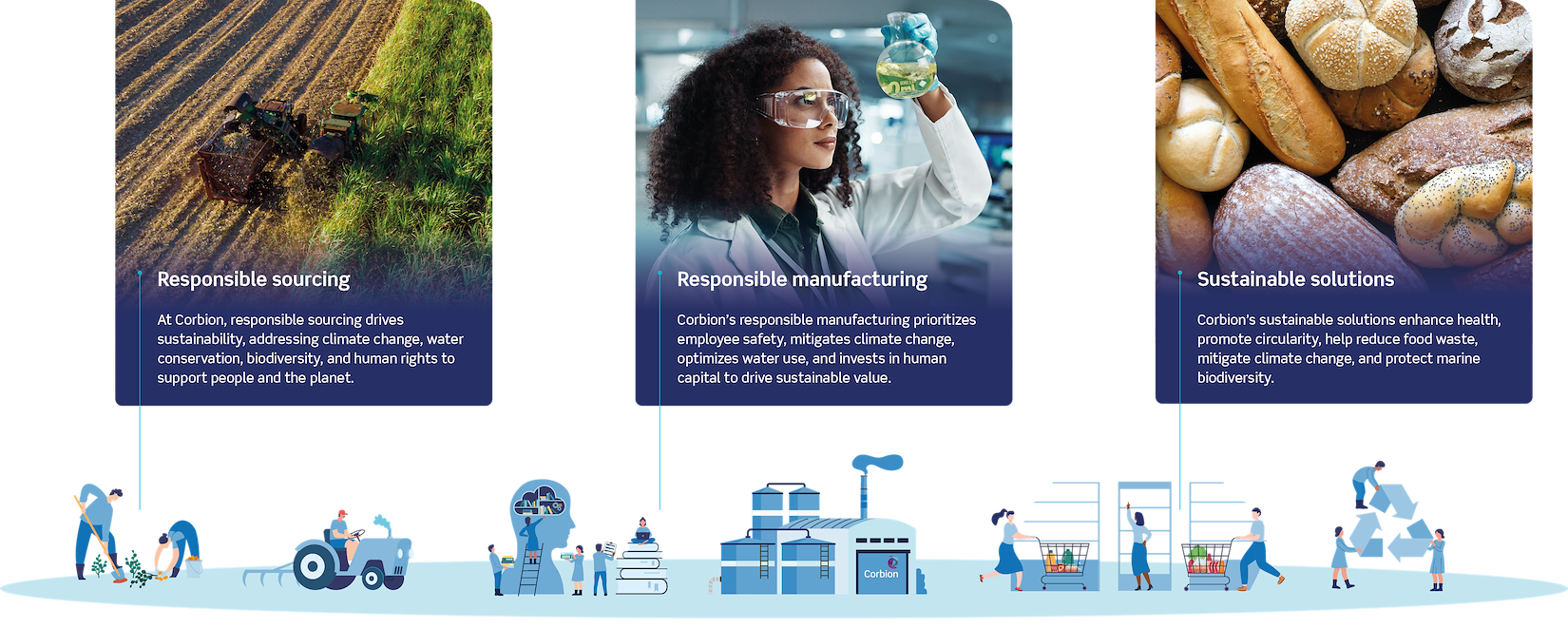
At Corbion, we are committed to creating sustainable value across the entire value chain. We achieve this by expanding our portfolio of sustainable solutions for our customers and by implementing responsible sourcing and manufacturing initiatives that help mitigate potential negative impacts of our business activities.

Sustainable solutions
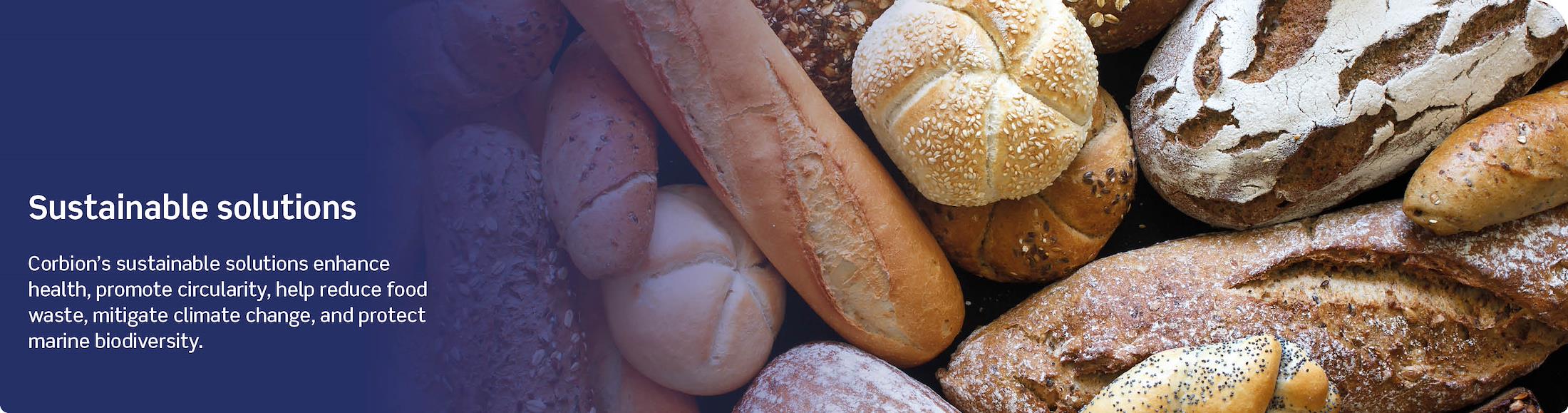
Our Advance 2025 strategy builds on Corbion’s fundamental strengths by further focusing our business portfolio in alignment with global market trends including opportunities related to sustainability. The majority of our solutions make a positive contribution to the United Nations Sustainable Development Goals (SDGs), and by focusing on the added value of sustainability, Corbion can tap into new markets, attract more customers, and ultimately drive further business growth. Our product portfolio includes the following sustainable solutions:
Corbion’s food safety solutions, nutrition, pharma, and biomaterials positively impact human health (SDG 3).
Corbion's food-ingredient solutions extend the shelf life of food products, which can reduce food waste at customers' operations or further downstream (SDG 12).
Corbion’s biochemicals enable customers to become more circular by switching to biobased alternatives, which helps to reduce the consumption of fossil resources (SDG 12).
Corbion's low-carbon solutions, especially our biobased portfolio, support the transition to a low-carbon economy, contributing to the mitigation of climate change (SDG 13).
Corbion offers omega-3 derived from algae fermentation as an alternative to traditional fish oil, reducing negative impacts on marine biodiversity (SDG 14).
To monitor our impact, we track the overall contribution to the SDGs as a percentage of Corbion’s total revenues. In 2025, 79% of our revenues contributed to the SDGs, overachieving our Advance 2025 target of 75%.
Corbion uses Life Cycle Assessments (LCAs) to understand the environmental impacts of our products. An LCA can be used as a scientific basis to identify improvement opportunities, compare different products, and support decision-making in new product and process development. We provide this information to customers to help them understand our products' carbon footprint and substantiate their sustainability claims. All Corbion LCAs are peer-reviewed according to ISO 14040/44 and ISO 14067 standards.
Our sustainable performance
|
Targets |
Actuals |
|||
|---|---|---|---|---|
|
2030 1 |
2025 1 |
2025 |
2024 |
|
|
Responsible sourcing |
||||
|
Raw materials covered by supplier code2 |
>90% |
>90% |
100% |
100% |
|
Verified responsibly sourced cane sugar3 |
99% |
98% |
92% |
99% |
|
Scope 3 emissions reduction (SBTi-approved target)4 |
25% |
n/a |
15% |
7% |
|
Verified deforestation-free key agricultural raw materials5 |
99% |
99% |
99% |
99% |
|
Responsible operations |
||||
|
Total Recordable Injury Rate6 |
< 1.25 |
< 2.50 |
3.17 |
3.58 |
|
Renewable electricity |
100% |
100% |
100% |
99% |
|
Scope 1 & 2 emissions reduction (SBTi-approved target)7 |
42% |
n/a |
17% |
25% |
|
Sustainable solutions |
||||
|
Net sales contributing to the SDGs (SDG 2, 3, 12, 13, 14)8 |
n/a |
> 75% |
79% |
74% |
Targets based on current manufacturing footprint; to be reviewed in case of acquisitions/major changes.
By quantity.
Bonsucro-certified or meeting the requirements of Corbion’s Cane Sugar Code verified by third-party audits, by quantity. See our Cane Sugar Policy (new window) for more information.
Scope 3 emissions from purchased goods and services, upstream transportation and distribution, waste generated in operations and investments. Absolute reduction compared to 2021 as the base year. We report our emissions in accordance with the Greenhouse Gas Protocol. Our full scope 3 emissions and biogenic emissions are reported in the Sustainability statements (new window).
Key agricultural raw materials include cane sugar, dextrose derived from corn, palm oil and derivatives, soy-bean oil and derivatives, and wheat, by quantity. Through Bonsucro certification, RSPO certification, or other certification covering deforestation; or demonstrated to be deforestation-free based on satellite data, third-party audits (e.g., Corbion Cane Sugar Code audit), and/or country-of-origin statements.
Including contractors. Based on CSRD definition.
Scope 1 emissions from direct production (from fuels), scope 2 emissions from purchased energy (electricity and purchased steam, market-based). Absolute reduction compared to 2021 as the base year. We report our emissions in accordance with the Greenhouse Gas Protocol.
Net sales of products for which there is evidence that the product contributes to the SDGs. See our Measuring what matters whitepaper for more details.
Responsible manufacturing
Environment, health, and safety
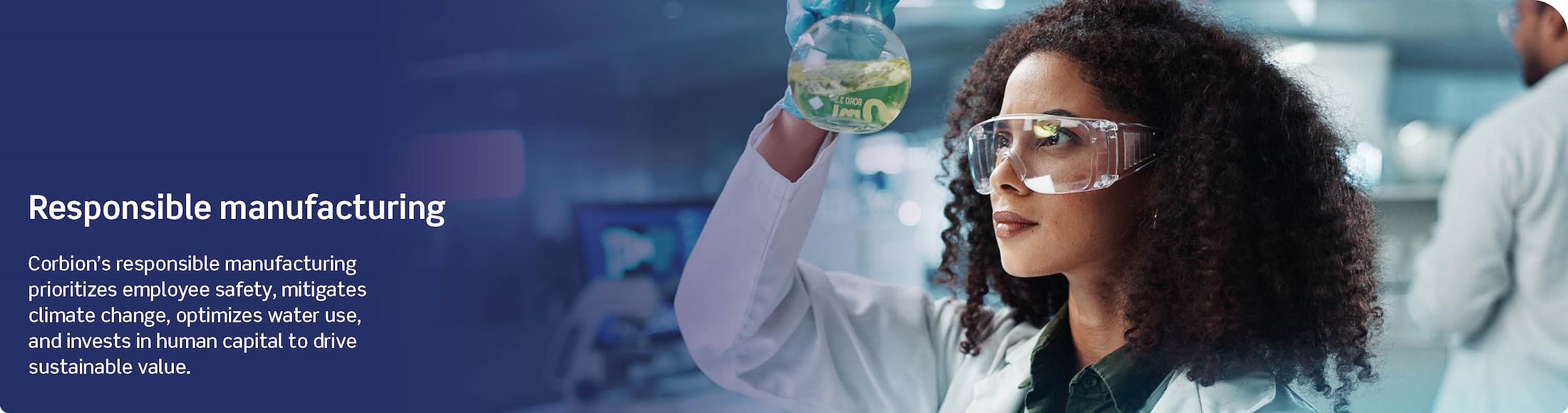
Corbion is committed to creating a safe and healthy workspace with zero incidents. We firmly believe no job is so important that it cannot be done safely and with minimal environmental impact. We approach our operations with meticulous care, prioritizing the safety, health, and well-being of our employees, contractors, and the communities we engage with.
Our activities are supported by a management system that includes policies, procedures, training, and feedback mechanisms, ensuring adherence to applicable laws and regulations as well as alignment with our company standards and codes. Corbion is committed to complying with the ISO 45001 standard and is working toward certifying all its production locations.
While we fell short of our own ambitions in terms of our safety performance target, we successfully reduced recordable injuries by 11% from the prior year. In this aspect of our business, no result greater than zero will ever be good enough. This is where 'preserving what matters' starts.
During 2025, Corbion continued advancing its Safety Excellence journey. Our focus remained on strengthening leadership, systems, and behaviors to further embed safety across all operations.
Visible felt leadership: The Executive Committee continued to prioritize safety-focused site visits at Corbion locations, emphasizing direct and open safety dialogues with employees and contractors. Safety observations and follow-up actions are consistently tracked in the global management system as part of our ongoing commitment to continuous improvement.
Process safety capability and systems: Robust Process Safety Management is critical to reducing the risk of major safety and environmental incidents at our production facilities, such as fires, explosions, chemical releases, or spills. Our long-term ambition is to foster a ‘zero-leak’ culture, ensuring products remain fully contained within pipelines. In 2025, we further strengthened our process safety capabilities through targeted Process Safety Management and Hazard and Operability (HAZOP) training, continued execution of periodic HAZOP studies and associated actions, enhanced management of process safety critical equipment, strengthened pre-startup safety review requirements, and site-specific support across our global locations.
Behavior-Based Safety (BBS): Launched in 2022, the Behavior-Based Safety program continues to strengthen site safety leadership and governance through employee engagement across all manufacturing locations and R&D sites. By the end of 2025, eight of our 12 manufacturing locations and one R&D location had completed the project phase and are progressing with their safety initiatives under the guidance of local safety steering committees. We aim to include all manufacturing locations by the end of 2026, with the remaining R&D locations implementing the core BBS processes by the end of 2027.
Global EHS Audit Program: In 2025, we continued evaluating our manufacturing and R&D sites for compliance with Corbion’s EHS standards. This internal audit program covers all manufacturing locations and complements ISO audits, providing assurance that our global EHS requirements are consistently applied.
Everyone at Corbion’s manufacturing sites, including employees, temporary workers, and contractors, participates in an occupational health and safety system. Most sites are ISO 45001 certified, covering the majority of production volume. Non-certified sites ensure compliance by following Corbion’s global EHS standards and Safety Rules. Six sites hold ISO 14001 certification, representing a significant portion of production.
Overall, our employee absentee rate was 2.7% compared to 3.5% in 2024.
Climate action
At Corbion we are committed to playing our part in combatting the climate crisis by offering low-carbon solutions to our customers and by reducing our own GHG emissions and achieving net-zero emissions by 2050. We have set emission-reduction targets grounded in climate science through the Science Based Targets initiative (SBTi).
We are committed to reducing our absolute scope 1 and 2 emissions by 42% and our absolute scope 3 emissions by 25% by 2030, compared to 2021. We are also committed to reaching net-zero GHG emissions across the value chain by 2050. Our targets were validated by the SBTi in 2025.
To achieve our SBTi commitment, we focus on the following initiatives in our own operations:
Reduction of energy consumption through energy efficiency measures.
Electrification of fossil-fuel driven systems.
Implementation of renewable electricity solutions to reduce emissions from energy generation. Specific actions include the installation of solar panels on site and the purchase of off-site renewable electricity, through power purchase agreements or by purchasing renewable electricity certificates.
Introducing renewable heat solutions to support our transition from fossil fuels to renewable alternatives such as e-boilers, biogas, and hydrogen.
Process innovation to decarbonize the lactic acid production process.
In 2025, we updated our roadmap for achieving our 2030 targets across scope 1, 2, and 3 emissions. While all reduction areas remain relevant, meeting these goals is increasingly challenging and depends on stronger business cases, sufficient investment, and supportive policy frameworks. New insights led to adjustments in feasibility and timing, for example, renewable heat solutions in Thailand and the US are unlikely before 2030 due to current energy prices favoring natural gas. We have advanced existing opportunities and identified new ones, including lactic‑acid process innovations planned after 2030.
In 2025, we completed the following actions to reduce our GHG emissions:
Energy efficiency
We implemented the first energy-saving project identified by the energy scan at our Blair (US) site, focusing on improvements to the steam system. Additional opportunities will be rolled out in the coming years on energy saving.
In Gorinchem (the Netherlands), the energy scan is being updated. First improvement projects are implemented in 2025, such as insulation improvements and replacements of pumps.
In Montmeló (Spain) we have implemented several projects related to steam reductions that were identified in the last years. For the coming years, additional measures have been identified for energy reduction in Montmeló.
The implemented real-time monitoring of our steam consumption in Gorinchem, has highlighted procedure and process improvements that are partly implemented in 2025. The remaining will be implemented in 2026. The implementation of real-time electricity monitoring is ongoing, and we have expanded this activity to our locations in Brazil.
We have updated the longlist of energy reduction projects with new insights into energy prices, CapEx projections, and subsidy opportunities. Based on this, the roadmap towards 2030 has been updated.
We set site-specific energy efficiency targets for the six manufacturing sites with the highest energy consumption. Four sites have met their site-specific target in 2025. Next to energy savings, these targets also led to increased awareness, ownership, and commitment among colleagues.
Electrification
We have installed an electrically-driven evaporator in Gorinchem in the second quarter of 2025.
We evaluated the feasibility of electrically-driven evaporators and heat pumps for different parts of our processes. The resulting projects have been included in our 2030 roadmap.
Renewable electricity
In 2025, we implemented renewable electricity at our remaining two sites, completing the transition across all operations. As a result, we successfully achieved our 2025 target of 100% renewable electricity coverage.
Renewable heat
We continued the evaluation of feasible alternative fuels for heat production at our sites in Gorinchem (the Netherlands), Montmeló (Spain), Blair (US) and Rayong (Thailand). Alternative fuels are not realistic in Thailand and the US in the coming period, especially due to the price difference between natural gas and electricity.
We are evaluating the implementation of an e-boiler to electrify steam production at our Gorinchem site, though this option is unlikely to be operational before 2029.
Process innovation
We continued our long-term innovation program and initiated several new projects.
Compared to 2024, our scope 1 and 2 emissions increased due to business growth and due to the ramp-up of the new circular lactic acid plant in Thailand. Our new circular lactic acid technology enables the recycling of processing chemicals, reducing scope 3 emissions, which consumes additional energy compared to the conventional lactic acid process, leading to an increase of our scope 1 emissions. The further ramping up of this plant therefore had a positive impact on our scope 3 emissions, which decreased significantly compared to last year. Overall, the cradle-to-gate GHG emissions of the new technology are reduced by more than 30% compared to the conventional lactic acid production in Thailand.
Responsible sourcing
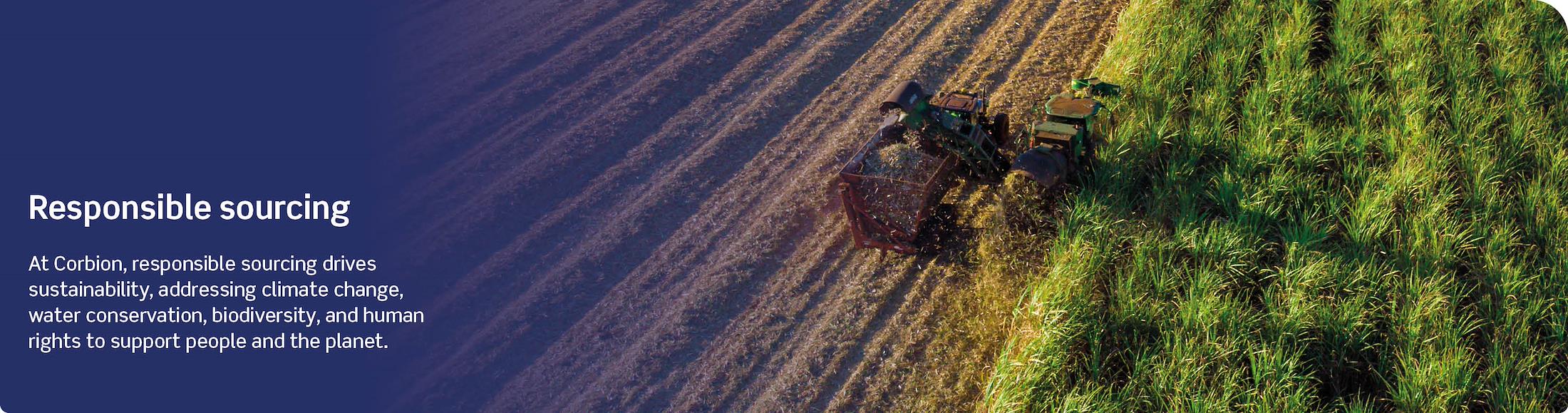
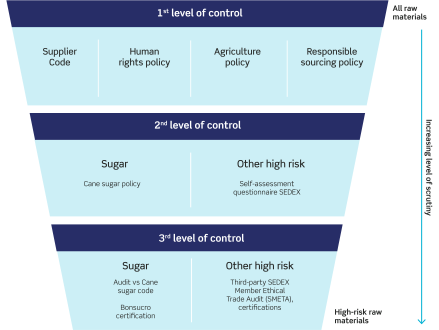
A significant part of our value chain’s environmental and social impact is upstream of our operations. To safeguard our sustainable solutions’ overall positive environmental and social impact, we need to ensure our raw materials are sourced responsibly. Our Supplier Code (new window) defines Corbion’s expectations for all suppliers and their contractors. The code is in line with the OECD Guidelines for Multinational Enterprises, UN Guiding Principles for Business and Human Rights, the Ethical Trading Initiative Base Code, Accountability Framework Initiative, and the fundamental conventions defined by the International Labour Organization. All our raw material suppliers must sign this code to confirm their adherence or demonstrate commitment through their own company policies that embrace the code’s standards.
We assess all our raw material suppliers for potential risks related to human rights and environmental impacts. This sustainability risk assessment is conducted using RepRisk, a tool that systematically identifies material ESG risks by analyzing information from public sources and stakeholders. It also considers specific risk elements, such as the use of SIN-listed raw materials and potential conflict minerals. The risk assessment is updated annually and conducted for any new raw material or supplier. Alongside these assessments, Corbion uses the Supplier Ethical Data Exchange (SEDEX) platform and the SEDEX Members Ethical Trade Audit (SMETA) to monitor the social performance and compliance of our high-risk suppliers.
Sustainable agriculture
A sustainable agricultural supply chain is of material importance to our business, as we rely on agriculture for our biobased raw materials. It is also vital to the communities in which we operate and to our planet’s resources. We recognize that intensive agriculture can have an adverse impact on people and the environment. The agricultural sector is the second-largest source of greenhouse gas (GHG) emissions globally, contributes to deforestation and biodiversity loss and farming of sugarcane, palm oil, and soybean oil has been linked to poor working conditions and forced and child labor issues. Sustainable agriculture, however, has the potential to protect the planet, enhance the economic viability of the agricultural sector, and support the livelihoods and well-being of farmers and communities.
Corbion is not directly involved with the growing, harvesting, or processing of the crops used to make our raw materials. We partner with our direct suppliers and conservation solution providers and engage with other stakeholders involved in our agricultural supply chains to promote our vision for sustainable agriculture. We also implement relevant certification schemes, including Bonsucro and RSPO. Our Sustainable Agriculture Policy describes our vision and fundamental principles, including respecting human rights; protecting biodiversity; eliminating deforestation; advocating stewardship of the air, soil, and water; and mitigating climate change.
Deforestation-free agricultural supply chains
The production of agricultural raw materials can involve the conversion of natural land into agricultural land. We are committed to doing as much as possible to avoid this, and we track the percentage of key agricultural raw materials (sugar, palm, soy, wheat, corn) purchased that is verified deforestation-free. Our target is to achieve >99% deforestation-free key agricultural raw materials by 2030.
About 21% of our key agricultural raw materials are sourced in North America, where deforestation is not an issue. According to the Agri-footprint database, which is based on statistics from the Food and Agriculture Organization of the United Nations, no land transformation from forest has occurred in the sourcing areas of Corbion’s corn dextrose, soybean oil, or wheat suppliers in the US. For sugar and palm oil sourced outside of North America, the absence of deforestation is verified through audits, satellite studies, and Bonsucro or RSPO certification. Combined, we verified that at least 99% of our key raw materials are deforestation-free globally, similar to last year, meeting our 2025 and 2030 targets. We have not identified incidents requiring remedial actions.
Cane sugar
Corbion’s Cane Sugar Code defines specific requirements for producing sustainable cane sugar, based on Bonsucro’s definitions for sustainable sugarcane and derived products. In 2025, the share of verified responsibly sourced sugar decreased from 99% to 92%. This temporary decline was driven by the use of alternative suppliers to ensure continuity of supply, for which verification was not prioritized given their short‑term nature. As a result, we did not meet our 2025 target of 98% verified responsibly sourced cane sugar. To strengthen performance going forward, we have implemented targeted measures to increase the share of verified sugar sourcing and remain confident in our ability to return to and exceed target levels. See our Cane Sugar Policy (new window) for more details on our audit program.
Climate action
To achieve our SBTi commitment, we engage with our suppliers to promote climate action in our supply chain. We focus these efforts on high impact raw materials including cane sugar, corn dextrose, and chemicals.
In addition to supplier engagement, another approach is to implement third-party sourcing certifications, such as Bonsucro, where GHG emissions are reduced by complying with the certifications’ stringent environmental standards. Specifically in Brazil, cane sugar suppliers also produce biofuels and voluntarily have their production process audited under the RenovaBio program (National Biofuels Policy). This program provides a framework for certifying a mill’s efficiency in reducing GHG emissions, which is of strategic importance to the achievement of national decarbonization targets.
In 2025, we continued engaging and supporting suppliers in the development of their CO2 reduction plans, focusing on high-impact suppliers. We collected primary data for approximately 71% of GHG emissions from raw materials included in our target scope as a result of this engagement. Engagement with our chemical suppliers resulted in the implementation of renewable electricity (ISCC plus certified) for two of our raw materials from 2025 onwards. Regarding logistics, we increased the use of intermodal freight transport over truck transportation in the US, resulting in an emission reduction of 0.6 kton annually. We also implemented EV trucks for on-site movements in Totowa (US).
Compared to 2024, our scope 3 emissions decreased, driven by the ramp up of the circular lactic acid plant. Progress on supplier engagement remains slower than expected, driven by a global slowdown in climate action that reduces emissions‑reduction potential across the value chain. Because many of these areas fall outside our direct control, continued progress requires strong external collaboration and broader systemic change. Our roadmap remains a living document, updated as conditions evolve.
External recognition
Sustainability is a source of pride and purpose for everything we do. Our strategy is aimed at creating value for all stakeholders by growing our business in sustainable ingredient solutions. We highly appreciate it when our sustainability efforts are recognized by others.
CDP
CDP runs a global disclosure system that enables companies, cities, states, and regions to measure and manage their environmental impacts, with a focus on climate change, water security, and deforestation. A detailed and independent methodology is used to assess companies, allocating a score from A to F based on the comprehensiveness of disclosure, awareness, and management of environmental risks and demonstration of best practices associated with environmental leadership, such as setting ambitious and meaningful targets. Entities that do not disclose or provide sufficient information are marked with an F. The CDP questionnaire is aligned with the recommendations of the Task Force on Climate-related Financial Disclosures.
Corbion earned scores of A in Climate and A‑ in Water. These results are based on data reported by Corbion through CDP’s Disclosure Cycle 2025. Corbion’s improved score (A- last year) reflects its science-based approach to Climate action, with emission reduction targets approved by the Science Based Targets Initiative. Corbion’s score in the area of Water increased to A- from a B in 2024, demonstrating leadership in water management. Enhancements to its water management process have included implementation of water-reduction initiatives at manufacturing sites determined to have high water risks, thereby creating stronger, more resilient business operations.
Our CDP disclosures (new window) on climate change and water are public and can also be downloaded from our website (new window).
|
Program |
Corbion score |
|
Climate change |
A |
|
Water |
A- |
EcoVadis
Corbion has received a Gold Sustainability Rating in the 2025 EcoVadis CSR assessment, placing us in the top 5% of all suppliers in our sector worldwide. This prestigious rating reflects our commitment to sustainability across four key areas:
Environment
Labor practices
Fair business practices
Sustainable procurement
In addition to the Gold Medal, EcoVadis recognized Corbion with its highest designation in climate maturity (Leader). This distinction is reserved for companies with advanced greenhouse-gas (GHG) management systems and best-in-class commitments, actions, and reporting capabilities within their respective industries.
EcoVadis evaluates companies on 21 sustainability criteria, ranging from CO2 emissions to human rights and business ethics. The framework is aligned with leading standards, including GRI, Global Compact, and ISO 26000.
This recognition underscores Corbion’s commitment to preserving what matters and supports our broader business strategy to create lasting value responsibly. Explore our full EcoVadis profile and rating on our website (new window). Learn more about our Ecovadis Gold Medal | CORBION NV.