Biodiversity
Most of Corbion’s raw materials are derived from agriculture, a sector whose viability depends on healthy terrestrial ecosystems and the sustainable use of land. While agriculture has potentially negative environmental impacts such as contributing to deforestation and biodiversity loss, it can support the transition to nature-positive outcomes such as soil health and carbon storage.

Corbion’s business model depends primarily on carbohydrates, which are used as feedstock in our fermentation processes.
Within our supply chain, Corbion’s key material biodiversity drivers are land use, land use change and freshwater. We are committed to doing as much as possible to limit our negative impacts in our own operations and supply chain, while aligning our business growth with opportunities for generating a positive impact on biodiversity. We use the methods and tools of the Science Based Targets Network (SBTN) to inform materiality assessment. We also pay close attention to the evolving landscape of nature-related frameworks, to determine how we can further strengthen our approach.
How we manage our impact: strategy and governance
Impacts, risks, and opportunities
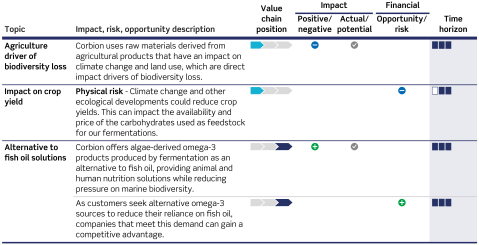
For disclosures related to the impact and opportunity on alternative to fish oil solutions, see section Our sustainable solutions (new window).
We used the insights obtained through our participation in the SBTN pilot to identify material impacts for Biodiversity. The pilot used the technical guidance from 2024 and version 0.3 (2023) of the guidance for land targets. This comprehensive approach covered systemic risks arising from the complex interactions between land use, water use, and agriculture management practices. We did not conduct consultations with affected communities in the assessment.
Based on the SBTN materiality screening tool (new window), the impact of Corbion’s direct operations on water quality, land use, and land use change is not material. None of Corbion’s facilities are located in biodiversity sensitive areas. We have manufacturing sites located near biodiversity sensitive areas (such as those in IUCN category IV or V protected areas). However, our activities in these facilities do not negatively impact these areas, nor impact threatened species.
We are most dependent on nature in our upstream value chain, specifically through the carbohydrates that we use in our fermentation processes. Sourcing of these carbohydrates may negatively impact nature (through reduced ecosystem intactness and tree cover loss) and biodiversity (by impacting the mean species abundance index). Material carbohydrates include sugar derived from sugarcane, sourced in Brazil and Thailand, and dextrose derived from corn, sourced in the US. After the divestment of our Emulsifiers business, our use of palm oil and soy is no longer material.
Policies
Supplier Code
Our Supplier Code (new window) defines Corbion’s expectations for all suppliers and their contractors. Its objective is to ensure alignment between Corbion’s actions and the actions of our suppliers on business ethics, human rights, labor conditions, and environmental practices. In 2025, we updated the code and included additional requirements amongst others regarding GHG emissions and deforestation. Our expectations for suppliers include having no deforestation in their value chains and acting on their responsibility to reduce emissions to air, water, and soil, as well as negative impacts on biodiversity. All our raw materials suppliers must sign this code to confirm their adherence or demonstrate commitment through their own company policies that embrace the code’s standards. When necessary, we support suppliers in understanding and meeting the requirements of the code.
Sustainable Agriculture Policy
Our Sustainable Agriculture Policy (new window) describes our vision and key principles for sustainable agriculture in our upstream value chain, including by protecting biodiversity and eliminating deforestation. Focusing on our key agricultural raw materials (cane sugar, palm oil, corn-dextrose, soy bean oil, and wheat), the policy reflects our commitment to supporting the natural function of ecosystems. We require our raw material suppliers to avoid development or cultivation on areas defined internationally or nationally as legally protected, high biodiversity value, high carbon stocks, grassland, shrubland, and tree plantations, tracking how land use has changed over the past 20 years. We have conducted these studies for Brazil and Thailand, and an annual monitoring program is in place. We have not identified incidents requiring remedial actions.
Cane Sugar Code
Corbion’s Cane Sugar Code defines specific requirements for producing sustainable cane sugar, based on Bonsucro’s definitions for sustainable sugarcane and derived products. Implementation is monitored through audits and certification. For more details on our audit program, see our Cane Sugar Policy (new window).
All the policies mentioned above include social considerations in addition to mitigating impacts on biodiversity. Combined, our Supplier Code, Sustainable Agriculture Policy, and Cane Sugar Code address both Corbion’s impact and risks related to biodiversity. The Chief Technology Officer, Chief Integrated Supply Chain Officer , Head of Sustainability, and Head of Procurement hold joint accountability for the implementation of these codes and policies.
Performance
Targets
|
Biodiversity targets |
2030 Target |
2025 Target |
2025 |
2024 |
|---|---|---|---|---|
|
Verified responsible sourced cane sugar |
99% |
98% |
92% |
99% |
|
Verified deforestation-free key agricultural raw materials |
99% |
99% |
99% |
99% |
|
Raw materials covered by generic supplier code |
>90% |
>90% |
100% |
100% |
We target 99% verified cane sugar by 2030 to address the environmental and social risks in our cane sugar supply chain. We also target 99% verified-deforestation free agricultural raw materials as the production of agricultural raw materials can involve the conversion of natural land into agricultural land. Finally, we target 90% supplier code coverage to ensure suppliers align with our standards. Our targets aim to avoid and minimize potential negative impacts in our value chain, which is the first and most crucial step of the biodiversity mitigation hierarchy. Our targets are not aligned with the Kunming-Montreal Global Biodiversity Framework, relevant aspects of the EU Biodiversity Strategy for 2030, and other biodiversity and ecosystem-related national policies and legislation related to biodiversity and ecosystem protection. Corbion has not used offsets in setting targets or actions.
Actions and progress
Responsibly sourced cane sugar
In 2025, the share of verified responsibly sourced sugar decreased from 99% to 92%. This temporary decline was driven by the use of alternative suppliers to ensure continuity of supply, for which verification was not prioritized given their short‑term nature. As a result, we did not meet our 2025 target of 98% verified responsibly sourced cane sugar. To strengthen performance going forward, we have implemented targeted measures to increase the share of verified sugar sourcing and remain confident in our ability to return to and exceed target levels.
Deforestation-free agricultural supply chains
The production of agricultural raw materials can involve the conversion of natural land into agricultural land. This brings the risk of deforestation, which we are committed to avoiding. To monitor the risk of deforestation in our agriculture supply chains and provide more transparency, we track the percentage of our key purchased agricultural raw materials (cane sugar, palm oil, soy bean oil, wheat, and corn-dextrose) that are verified deforestation-free. Our target is to achieve 99% deforestation-free key agricultural raw materials by 2025 and we have achieved this since 2023. About 26% of our key agricultural raw materials are sourced from North America, where deforestation is not an issue.1 For sugar, palm oil, and soybean oil sourced outside North America, the absence of deforestation is verified through Bonsucro, RSPO, or other deforestation certification, or demonstrated to be deforestation-free based on satellite data, audits, or country-of-origin statements. We use satellite imagery to monitor deforestation and land conversion in our supply chain. These assessments cover deforestation and land conversion of IUCN protected area categories I-VI, peat land, high carbon stocks, grassland, shrubland, and tree plantations, tracking how land use has changed over the past 20 years. We have conducted these studies for Brazil and Thailand, and an annual monitoring program is in place. We have not identified incidents requiring remedial actions.
Our action plans to manage negative impacts on biodiversity do not incorporate local and indigenous knowledge and nature-based solutions.
The biodiversity actions involve colleagues from sustainability and do not require significant operational expenditures or capital expenditures.